Showing posts with label Berchador. Show all posts

Monday, June 22, 2026

Lines in the Sand - Response to TV Show Viewers: Post 65

Response to TV Show Viewers: Post 1 - January 23, 2026

Response to TV Show Viewers: Post 64 - June 19, 2026

Although likely unintentional, HGTV/DIY producers had drawn some lines in the sand when they made Charleston integral within the show title and overinflated their description of me. From a marketing approach it was well aimed. But it other respects it put us down in a hole.   

This demarcating may have just happened seamlessly in early stages. Some producers met me, perhaps leaving with a lukewarm opinion. Then more came to film and create a pilot episode. After not wowing their socks off, it’s likely that most producers were left thinking, “What do these details really matter after all?”  

And schedulers placed us into 11pm and 1am time slots.

Except we did better than anticipated, leading to a full season. And by the end of 2015, after ARC grabbed attention, a verbal green light for another series had been inadequate for bank officials.

Rather than strictly being a dollars and cents issue, it was more my inability to connect the dots of basic business and secure a legitimate agreement on paper. The network placed a large pie on the table, and there’d been plenty of slices and slivers to satisfy everyone. I saw it but had been incapable of bridging the gaps. And without some sort of written contract, I’d been unable to qualify for the seven-figure financing I needed to secure three houses downtown. And so, I shifted my house hunting further inland.

Summerville thrives nicely without the Holy City. Except for coastal beaches, everything needed is up there in this jurisdiction that spills into all three of the counties that make up Berchador. It’s inhabited by sweet folks, but they’re also proud people. And American Rehab Charleston playing out as if I was down in the more well-known city rather than up in Flower Town in the Pines was disrespectful, hurtful, and another missed opportunity.

If the show had been named “American Rehab Summerville,” it’s likely that more doors would have been opened for us up in this small southern town. But producers had no way of knowing any if this. They didn’t live here, were just visiting for the work assignments, and didn’t have a lot of familiarity. Making it worse, I didn’t leave a strong enough impression for them to bring me into the show naming conversations.

I’m speculating, but it just stands to reason that with the title, and within the series, that I came across to the folks of Summerville as if I was less than pleased or proud to be renovating a house in that town. This wasn’t the case, but who’d believe that after watching the series?

Still, at the start of 2016, I was hopefully oblivious to these factors as I began beating the bushes for three more pig’s ears in Summerville.       

Along with traditional real estate searches, online websites, and scouting neighborhoods in search of For Sale by Owner signs in front yards, I spoke with the president of the Summerville Preservation Society, a local real estate mogul, and a neighbor of the American Rehab House. Although the investor was willing to let us renovate some of his properties for the show, he seemed genuinely indifferent about selling me a few of his vacant homes.

The thing is, even though that could have worked, I had no interest in being the face of a show where my status was overinflated, bragging about working in Charleston while actually being in Summerville, and in a position where I’d be claiming to own a house that wasn’t actually mine. This would have me even further from something organic and authentic.

I had a finite amount of savings to work with and was swinging and missing in Summerville. Eventually, with the help of the retired neighbor, I was introduced to the President of the Upper Dorchester Historical Society, and I pivoted my attention to the village of St. George even further away from the region’s epicenter.

Response to TV Show Viewers: Post 66 - June 22, 2026

Wednesday, June 17, 2026

Contractual Limitations with Large Implications - Response to TV Show Viewers: Post 63

Response to TV Show Viewers: Post 1 - January 23, 2026

Response to TV Show Viewers: Post 62 - June 15, 2026 

I hope it’s been made clear, that although I’ll admit to having a solid grip on how to renovate a jacked-up house, I’m not one to claim to have the recipe for success. At this point, I’ve lived a lot of my life recognizing it as an adventure that comes with scars in many forms. Rather than a world beater, I understand how I’m stepping into something else, the end of my life’s autumn when it’s time to share and encourage.    

This series began with me answering questions while offering insight into pitfalls to watch for. The intention was to inspire along with educating by way of owning mistakes. I’m not quite done with this progression of responses, but I’m approaching the landing strip that’s surely up ahead past the clouds.

At the end of 2015, I had a renewed chance to do some noteworthy work: renovate three houses in Charleston, South Carolina with film crews documenting the efforts before producing another series telling three stories. Each project would span multiple episodes. These yet-to-be-determined homes would be in rough condition, with me leading the way in bringing each back to life.

Conservative math worked. Buying a house others don’t want often equates to undervalued asking prices. Costs to rehab are inexact, but experience allowed me to remain steadfast. There would be margins that contained indeterminable profit. And the carryover was potentially even greater; more opportunity, a future of interesting projects working with talented people, and also a larger platform to help aspiring DIYers see and better understand how they could take on a left-for-dead house near them, and against the odds, breathe new life into it.

Getting to where I needed to wouldn’t be easy, there were crevasses ahead, and it was my responsibility to bridge these gaps and inspire others to do the things within their reach.

I had savings to invest for earnest money on short term loans but was well short of what this moment called for financially. I needed investors or lenders. This was no shock to my system, nor my wife’s. We each knew this from the day the programming director said, “We need you to buy three more houses for next year.”

When you renovate property that’s condemned, abandoned, or seemingly unwanted, you need a find-a-way, make-it-happen attitude. I’m not sure how else to push through. Faith and optimism equal needed fuel. In renovation, like throughout the construction industry, people tend to shy away from a four-letter word like can’t.  

So even though I knew the assignment was daunting, I’d been conditioned to focus on the ways to think creatively, next steps and greater picture to accomplish the most glaring goal. In my eyes and mind there were clear prerequisites, and it was on me to shed light on these necessities.

Sadly though, I bombed spectacularly, which bled over into the other things I needed.     

First, I’d been unable to break through in convincing producers to make adjustments within the original six episodes, editing that would gain confidence of viewers, but also all the people we needed support from throughout Berchador.

Secondly, the percentage of locals who’d heard of American Rehab Charleston was tiny. Everyone I met had heard of HGTV and knew of a few of their most popular programs. And locally, most had heard of Southern Charm. Even if they’d never seen an episode, they knew the Bravo series was actively tapping into some of the Holy City’s popularity. As much as I tried, I’d been unable to resolve our regional blind spot, something that rippled into the short list of pressing preliminaries.   

Although these were both very important, neither was as significant as my lack of a written agreement with HGTV/DIY, the network pair who’d opened this door for me back in 2013. This was the nagging liability, a lingering headache that had lasted over two years. I could tell a banker that I’d been on TV and they could see the proof on their desktop computer screens. But they needed more. Having family, friends, and neighbors who’d seen the shows, heard of the series with good things to say, would have helped a lot.

And how much would paperwork with my name and theirs helped? Who’s to say? I’ll never really know since I struck out here as well.

Just before filming the pilot episode, I had received paperwork from the production company. And with the help of a local attorney, I sorted through it. The counsellor had no major concerns, describing the document as boiler plate. However, rather than something prepared for home improvement programming, he explained how this document was written for game or dating shows, rather than what we were doing in Summerville, rehabbing a house. However, it was a necessary formality, and the entertainment lawyer gave me a legal nod on signing it.   

But efforts to gain seven figure financing ushered in a need to examine these pages more closely. And it became clear that in order to secure necessary financing, I’d need a valid contract with Scripps or its subsidiary networks.

Response to TV Show Viewers: Post 64 - June 19, 2026

Friday, June 12, 2026

House Hunting Made Easier - Response to TV Show Viewers: Post 61

Response to TV Show Viewers: Post 1 - January 23, 2026

Response to TV Show Viewers: Post 60 - June 10, 2026 

At the end of 2015, it may have seemed as if the network and production company were waiting on me to provide them with photos, estimation budgets, site details for production mobilization, and addresses of prospective houses. But in reality, the three of us had preliminary steps that needed immediate attention and action.

When I begin a renovation, I have a step-by-step process that works for me. I knew early on what to do on my own house project, in a lot of ways from Day 1 back in 2000, because I’d been dreaming about the moment for some time and had construction experience to build upon. Although I didn’t go in with history on a condemned house or fire damage, I had enough fundamentals to get my introductory pig’s ear to a point that felt more familiar.

TV rehabbing, and my cliff dive into it, was so different though. I had no background to build on. Other than what I speculated about as a viewer of This Old House and other home improvement types of shows, I was an empty jar. Still, two years had given me what I needed to sort out so much. There were still loads I didn’t know, couldn’t know really, but what I’d figured out, I felt rock solid on, the things I described in my previous post. I wasn’t totally certain, but I felt pretty good about my takes over what the others and I needed to dig into hot and heavy. These were far from an ironclad guarantee to success, but I held some certainty they’d be sufficient to sweep up more audience share, make some wrongs right, and create energy, enthusiasm, and momentum in my tri-county region of the state. In my head and heart, I felt I had some heightened responsibility toward what Scripps had initiated for all three of us—network, production company, and myself—and for us to put forth reasonable efforts focused on what I’d laid out.

On a normal project house, I feel more capable of driving the job as needed. I know what I can do, the work I really enjoy or knock out because I must, and what I’ll need help with. And if I’m unable to find the right skilled people, I’ll manage on my own to inch forward. Sometimes that means breaking a scope into smaller parts with me doing fractions and connecting with others to take on chosen pieces to complete the whole.

Home rehabbing television was different though. I didn’t know people to call on, nor was I qualified to do most of that. I was left to let a big team reach out to others, brainstorm, and tackle their tasks however they did. And although this removal was a good test for me, an exercise in faith, it was choppy. I was unaware of the progress others were making and it wasn’t work I could measure and evaluate visually. I just needed to hope they were chipping away, navigating obstacles along the way as they moved forward to where we’d need to be in the early months of 2016.

Just like it had been in 2013, we were in a holiday season time crunch. On the surface, my urgency to buy three houses suddenly, right then, would be laughable to the crowd of realtors overseeing the Berchador real estate market. However, with a home improvement series under my belt, and the involvement, participation, and quasi-anointment with and by HGTV/DIY, my aspirations came across as reasonable, more understandable. And the sooner people in Manhattan found us some time on HGTV, the easier this searching would become.    

However, just as it had been two years before, I was staring down the barrel of my original oversight of this golden opportunity to renovate my houses for TV: I had no written agreement with Scripps, HGTV, or DIY.

Response to TV Show Viewers: Post 62 - Coming Soon

Wednesday, June 10, 2026

Teamwork = Savings, Profit, & Ratings - Response to TV Show Viewers: Post 60

Response to TV Show Viewers: Post 1 - January 23, 2026

Response to TV Show Viewers: Post 59 - June 8, 2026

At the end of 2015, I was directed by my main contact at the network to buy three houses for the next year. The program namers had chosen to insert Charleston into the show title, and since the house was in Summerville, thirty miles from the Holy City, this was a precarious move. Far from a widely applicable name, it felt as if the city had been incorporated for reasons mentioned in a previous post.

This possibility added even more to the excitement I’d been through. However, in order for this renewed chance to really pan out, as best as possible for everyone, a collection of key details needed to be tackled while I house hunted.

Now, before I go on, it needs to be made as clear as possible, that I don’t believe I have all the answers. I’m merely giving myself a little credit for picking some things up in 2014 and ’15. When I started all of this in 2013, I knew nothing about TV. This experience was like a big pot of soup with all types of ingredients being dumped in over twenty-four months. My bowl left me with an impression, certain opinions, and basically some rather strong feelings of the most productive way to buy, rehab for producers, and then sell three pig’s ears in Charleston in 2016. I wouldn’t then or now claim to know more than the producers. I’m only writing at this point in time, that based on what I knew then, it would be best for lead players to genuinely consider what I was laying out and then move forward collaboratively.   

Beyond a simple to-do list, we needed an understanding amongst the networks, production companies, and me, as a coalesced unit, so everyone could maximize compensation and high ratings that equated to revenue for Scripps. We all had a ripe opportunity for continued support from network decision makers but had to work together and then deliver. And we needed to act quickly in separate yet concerted ways.

First, appropriate insurance coverage was a must. If something unfortunate happened, responsibility should be spread out, rather than risk assumed and potential damages absorbed by my family and I.

Secondly, the networks and editors would need to clean up American Rehab Charleston and scrub the parts in the six episodes that were short sided or inadequate.

The third detail was bigger. As I saw it, producers needed to also do whatever was necessary to air the series on HGTV, so many more of the people of Berchador could have a look. The Holy City was wildly popular and highly regarded. And to many in and around Charleston, relegation to DIY in lieu of the more prestigious HGTV seemed disrespectful. Many felt that a show commandeering the city’s name deserved better.

In this same bucket was the fact that for two years, 2014 and ’15, producers had told folks across the three counties how episodes would air on HGTV. Technically, producers had made good. We had logged time on the four-letter channel. But it was minimal compared to lesser-known DIY and for these reasons, a lot of people, way too many, felt as if folks here had been duped. This didn’t just reflect poorly on me, but the networks and producers coming back to town to continue on.   

Berchadorians would be more ready and willing to be part of the upcoming projects if the shows were on HGTV as local folks had been told when we were making ARC. Beyond the prestige, for some reason, DIY was not as accessible or even known about in our area, and this relegation impacted necessary trust, understanding, and enthusiasm that prospective tradespeople and contractors would logically have had if they, their families, and/or neighbors had opportunities to enjoy at least one episode or more on HGTV without upgrading to a more expensive TV provider package that included the DIY network.

Unless anticipated or needed reparation measures were taken and implemented, this DIY vs. HGTV slight would cost us in 2016. I was certain that airtime on the more well-known channel would be critical, going a long way to restore eroded faith. And with this, the number of people interested in coming on board would beef back up, and this would ripple to help keep renovation costs in check. In addition, I held hopes that these amends might carry over to my efforts to take ownership of three houses down in Charleston.

A fourth point was about the production company’s need to oversee the budget. In order for this to work out better for them, and also my assumed plans for these houses, they’d have to improve at managing the renovations. They’d need producers on staff with construction management backgrounds, people who knew how to read the contract documents coupled with a solid understanding of building codes and standards. Apathy concerning important things would no longer fly. I wouldn’t have the time nor money to make post-production corrections on three different properties downtown. And each of the chosen homes would need to be completed before producers left town, nothing short of three certificates of occupancy.

Plus, the production company would need to be mindful of safety measures which are non-negotiables in the building industry. Regardless of whether it was for TV or not, producers must commit to safety as top priority for everyone on site, and that completing the work had to be understood as a close second. Finishing on time and without overspending were also paramount, yet not over and above safety and quality work.

Fifth, I would need to do my part. I had to carry out orders to secure the acceptable properties. Then I’d naturally have to continue to be available for the producers, willing and capable of accommodating their schedules over the next twelve months to film and complete any pickups or voiceover work. I’d need to be able to deliver on camera, discuss the work and histories of three houses throughout the film days, keeping them straight in my head, bringing energy and enthusiasm every day.

Sixth, to maximize profit for the investment, not only would the shows need to be fast-tracked, produced and be put on HGTV quickly, but I’d need to maintain patience. Hopefully not two years again, but I had to be prepared to wait until potential buyers had time to see some of the fresh episodes since the shows would not just promote Berchador and Charleston, they’d be showcasing the renovated homes. If the projects were completed properly, then ratings would lead to profit that could be poured back into more properties. And perhaps, if all went well, this would mean more rehabs to be featured the following year.    

And finally, the skilled trades and vendors on site, needed more credit for their efforts, over and beyond contracted compensation. Rather than me getting recognition because I was the homeowner talking on camera, the men and women putting in long hours, sacrificing time from their families, coming in early and working late, deserved more airtime so their talents would be recognized within the episodes. That’s how it had been in the Rehab Addict samples I’d been sent back in 2013, and as I saw it, it was another ingredient for the secret sauce that had been left out of Amer. Rehab Chas. We needed that put back in. And this commitment should be understood fully, documented, and signed off on. This was not just the right thing to do; it was smart business that would make the shows even better while paying dividends in the form of lower renovation costs.

All of these things needed to happen so everyone was able to make the most of the opportunity. But once again, it came down to me. Even though it was the holidays, I needed to motivate producers to take their needed steps. There were limits to what I could do. And as I saw it, if I was going to be shopping for three houses, those in New York, Minnesota, and eventually Los Angeles as well, could designate some human resources to get started on what was needed. It was too late to put first things first, but we were getting another opportunity to get on track, and I was hoping we’d grab it with three hands.

Just like 2013, there was much that needed done and after I laid out my determined considerations to producers, I turned my attention to my part: finding three houses down on the historic Charleston Peninsula. Not closing just yet. Only house shopping.

Response to TV Show Viewers: Post 58 - Coming Soon 

Monday, June 8, 2026

Going After Three Houses in Charleston - Response to TV Show Viewers: Post 59

Response to TV Show Viewers: Post 1 - January 23, 2026

Response to TV Show Viewers: Post 58 - June 6, 2026

The network certainly had glorious intentions when producers included Charleston in the first show title while describing me as an expert in the restoration of historic homes. This was a good strategy to gain viewers in other parts of the country, and also different parts of the world. Plus, it was an admirable distinction to have placed on me. But it’s made me look like something of a clown—hopefully more so than is deservedsince many know that Summerville is thirty miles from the historic peninsula. This Dorchester County community is beloved, and it would have suited me better to brag about getting to work there, rather than be okay with it seeming as if I was down closer to the harbor. And I should have also found a way to set the dual networks straight, to get them to send a more accurate description of me out into cyber space.

And yet I was incapable, left dealing with this cursed blessing of being misleadingly connected to Charleston. Coupled with this was the added tax of being tagged as a historic home answer-man, with implied expectations that I was a male version of an actual historic restoration mover and shaker Nicole Curtis, who’d just begun to tackle the epitome of a pig’s ear, the Ransom Gillis House in Detroit.

Ransom Gillis House - Detroit

In 2013, people in my life wanted me to go for it, to see what would come of my early back and forth emailing and phone chats with HGTV/DIY. And in the two-year span, the circle grew to include others encouraging me on—producers in New York, Southern California, and Minnesota, along with even more people in Berchador who witnessed in person the action of the test reel, pilot, and series pick-up filming.

After the six-episode season of American Rehab Charleston made it to HGTV and DIY in the fall of 2015, I received the news that another season had been given the go-ahead. And with that, I needed to find three more houses for 2016.

Of all the diverse minds and voices huddled around me, I don’t remember anyone discouraging me from setting my eyes on Charleston. I clearly had a grand opportunity to make my mark—finding, buying, and renovating the three homes in the nationally adored Holy City.

As I described last week, my pig’s ear to silk purse efforts come down to money math. Initial investment, capital improvements, and estimated profit. And when you factor in the TV element, the potential payoff puffs up.

No one can estimate the exact costs to restore. And the impact the show would have on the final value is also a big question mark. But it was easy to see, that if things were done a certain way, sequentially, properly, a strategic, coordinated approach, then it would make sense and everyone could benefit nicely; the risks we’d all taken would produce wins across the board.

Buy-in on a plan to make sure everyone would get what they needed and a little bit more was the next step.


Using round percentages averaged together on multiple projects, I felt reasonably comfortable moving ahead. Ballpark numbers generated from thin air is an irresponsible way to approach investing in three houses to renovate and then sell. But things were happening fast and this sort of quick estimating was the starting point before tightening up budget-wise.

Based on past pig’s ears, generally, wishfully, speculatively calculating, I felt good about 30/30/10/30 as an initial working guideline. Thirty percent for a house no one else would take on; what would be seen as another gamble. Thirty on capital improvements. And around ten percent for closing costs to sell. The last remaining plus or minus thirty percent would be profit.

Moving forward in December 2015 began here.  

I had to find the right properties, and we needed a more effective way of managing the renovation budgets for each home. But the leftover percentage would be the biggest unknown.

Response to TV Show Viewers: Post 60 - Coming Soon

Wednesday, June 3, 2026

Apologies to the Binyas - Response to TV Show Viewers: Post 57

Response to TV Show Viewers: Post 1 - January 23, 2026

Response to TV Show Viewers: Post 56 - June 1, 2026

It feels as if I’m nearing the end of this response series. I think questions have been addressed and background has been provided to answer and help. There are just a few loose ends, views that should not be overlooked or sidestepped, including words of apology to some who have yet to be acknowledged. These may not be obvious to all, but that doesn’t make them any less necessary. And perhaps like my last post, these words may be long overdue.

I was once called an amateur historian. And as with the nickname, Houdini of Homes, I really liked someone pointing out how much I appreciate the stories and events of the past. More than an interesting subject matter to read about or discuss, I’ve grown to fully attempt to consider how the events and periods of history have impacted how, why, and where my project houses were built. Even though others might not concern themselves with these sorts of details, seeing them as trivial, I think this mindfulness is just part of what I do and how I do it. It allows me, at least as I see things, to do a better job making the most I have to work with and turning my pig’s ears into silk purses.

Berchador reveres those who grew up here and have remained to live, work, and raise their own families in this tri-county region of the Palmetto State. I think this is common in other parts, but here, because of its unique history, it’s notably different. For example, the Gullah Geechee call natives binyas—people who’ve been here. And people like me are described as comyas, since I’ve come here from somewhere else. And not being from the South, and even though I’m a Midwesterner, I’m also a Yankee, which I had to learn was more than a joke but is actually a sharply pointed pejorative to keep folks like us in our place.

One of the factors that makes this part of the world so special is its deeply rooted history of not agreeing with folks in other parts of the country. In the eighteenth century, the South Carolina Royalists fought with Britain, against the fellow colonists. These folks remained loyal to King George III. In the nineteenth century, the state leaders were the first to secede from the union. And in the twentieth century, they were defiant over segregation and miscegenation.

Most recently, June 24, 2010, the Charleston RiverDogs held Go Back to Ohio Night. This promotional event echoed chants shouted by locals, binyas whose patience for transplanted buckeyes has grown thin. Along with the rallying cries, select natives wear anti-Ohioian t-shirts, drive cars with likeminded bumper stickers, and one fed up creator launched a website dedicated to this animosity.     

As I’ve described in previous posts, I believe an HGTV/DIY show with Charleston in the title would have been better received in Berchador had the houses actually been down in the Holy City. But improving chances even more would have been a home owning renovator, or couple, born and raised right here in the tri-county area. Instead, producers and network executives were left doing the best they could with me, a comya Yankee Ohioan. So, if you’re like me, thinking someone from here would have been a better choice to be in my place on American Rehab Charleston and Restoring Charleston, I understand and you’re probably right.

It would have been helpful had I realized this back then. However, I was oblivious to long term implications and really wanted to take my shot. And in that way, my unawareness might seem as if I, and also, the networks and producers, were insensitive and disrespectful. With certainty I can write how this was unintended. But I can see how some folks from here may have resented the fact that an outlander like me was given such a big platform to speak about this area.  

In my own defense, many locals were skeptical and apprehensive about working with people from outside of the South. And although I have come to accept these feelings, those unfamiliar with this area just might not get it. I was willing and able to do it, and really wanted the gig, and since I’m familiar with non-southerners, I was less reluctant to talk and think this chance out. And that comfort was the one thing that might have made me more qualified than a born and bred binya.   

Response to TV Show Viewers: Post 58 - Coming Soon

Friday, May 22, 2026

Home Rehab TV Production Budget Stretching - Response to TV Show Viewers: Post 51

Response to TV Show Viewers: Post 1 - January 23, 2026

Response to TV Show Viewers: Post 50 - May 20, 2026

Most people would probably prefer to avoid unfairness or mistakes that come from not knowing. My writing about the larger story around making American Rehab Charleston is to help the curious and the ambitious.

The production company, I think more than HGTV and DIY, had a really difficult time filming and producing both the pilot and the five-episode pickup. I have openly admitted and explained how I failed to put nuts and bolts specifics on paper, documentation that could have served to lead and chart a path forward when we were first awarded the series in 2013. That would have made a significant difference for everyone here, Minneapolis, LA, and NYC, perhaps maybe even folks beginning to work out of Tennessee. However, other things like local geography and timing were out of my reach and it’s unhelpful for me to shoulder culpability for things beyond and above.

And by pointing them out, others can learn from what happened, think on it, and maybe apply it to their own efforts, in TV or otherwise.

In order to better understand what went on with me, us, my family and I and the many people working on American Rehab Charleston, you really should look past any ripple effect caused by Nicole Curtis and Rehab Addict moving on to another production company. It will help to put yourself in the shoes of the production company in Minnesota though.

Minneapolis is over 1,300 miles from Charleston. That’s two really long days of driving from there to here and then another forty-eight at the end. Much of the crew flew, travel expenses baked into the budget, but folks also had to truck equipment from there to down here, compensated for this haul and armed with a gas card to use along the way.

This is a radical change from creating and producing a show like Rehab Addict, something that was in producer’s backyard.

With a show filmed in the Twin Cities region, crew members could come and go each day. Sleep in their own beds. Eat breakfast and dinner at their kitchen tables. Work out of offices where costs were spread across many projects.

But being here, so far away, they needed per diems for hotels and restaurants, along with office space to operate out of. We’re talking over a dozen people, and not just Monday through Friday. They were dug in for three long months. Those expenses added up quickly, substantially.

Up in the land of the lakes, if there wasn’t a lot going on for days or weeks on Nicole’s project houses, they could shift their focuses to other things, until the foundation was rebuilt or rough-in scopes passed inspections. But being here, far from home, every minute of every day counted. High paid producers couldn’t just stand around like flamingos in a lagoon. Filming had to be done. Now, I must say, it was a lot of fun be-bopping around Berchador, filming beats with vendors and fabricators. I think I was quoted in one paper as saying I had “the time of my life.” But those talking points were costly, and some might say the juice wasn’t worth all the squeezing. And yet, they were here, had to keep busy, and be paid for this time.

Certainly, I now understand how we could have filmed some demo in March with the pilot, and then a few days here and there for reframing, rough-in, insulation and drywall in the months between spring 2014 and January 2015. That would have saved tons of money. In my opinion, viewers want to see before shots, the ugly, then some of the tedium in the middle, but interest lies mostly on the fresh, bright, colorful after scenes at the end. How much do viewers really want or need to see of the early boring scopes? Not much. So having all those gifted, high dollar people in town and on site too early on was a huge waste of money.

Also, producers agree to come work in Charleston for several months. They didn’t picture small city Summerville thirty miles away from the sexy trendy historic peninsula. They had expectations of staying in the popular districts. Those are also high priced, sucking construction funding out of the budget.

If I had promised Charleston, I would be apologizing for misleading people. As I’ve said before, I don’t live down there. I never have nor claimed to. I’ve worked and owned property within the Holy City limits, but that’s it. Someone else sold these folks on coming to work in the appreciated city for three months. I can see why they may have felt it was a bait and switch, especially when they were commuting and hour or more back and forth in traffic at the beginning and end of each long workday. I didn’t have to do this driving during this TV season of my life, but I’ve done it, and I can imagine how it wore on these crews.

Now, here’s where I could have served them better. Not that this would have been heartily considered, but I could have suggested that they only dig in deeply for the finishing phases, Plus, I could have tried to help them understand the value of staying on the outskirts, closer to where the projects were. This thinking would have applied to both shows, American Rehab Charleston, which was filmed in Summerville, and Restoring Charleston which was even further out in St. George. They could have all stayed a shorter drive away, saving time and a whole lot of money that needed for renovations and post-production.

I realize they wanted to enjoy their weekends, and they’d still have been able to. Friday and Saturday nights, maybe even Sunday, could have been spent sleeping over down in the touristy areas instead of burning cash unnecessarily seven days a week. Plus, meals cost more in these popular zones as well. Splurging could have been condensed to forty-eight hours each week, rather than 24/7 for fourteen weeks.

I probably should have found a way to plant this idea, and in this way, I failed the producers who were so unfamiliar with Berchador geography and how it would wreck the budget. They wanted to help me with the renovating, so I should have done a better job helping them save money, which would have made the rest of these difficult assignments easier for them. I didn’t know what I didn’t know about television. And the same applied to them and what they didn’t understand about this tri-county region.

Response to TV Show Viewers: Post 52 - May 25, 2026

Friday, May 15, 2026

What’s With Charleston in the Titles? - Response to TV Show Viewers: Post 48

Response to TV Show Viewers: Post 1 - January 23, 2026

Response to TV Show Viewers: Post 47 - May 12, 2026

To viewers far away, or people who’ve never visited this area, Charleston being in both show titles doesn’t raise eyebrows. Or at least none of these folks have ever asked me about it. However, people who live here or who’ve been to this tri-county region of the Palmetto State, those who know the geography, have opinions more than any questions for me regarding the loose use of Charleston, not just in the show titles, but also as I’m referencing the historic city as I talk throughout the series. And for the most part, I understand and agree with where they are. There was a lot of misuse of the name. And I get why some see it as disrespectful from many angles.

Before getting into that, I think I should point out, that although I have owned property in Charleston, I’ve never lived there, and not really even spent a lot of nights in Charleston County. I’ve lived in Berkeley or Dorchester Counties since moving down here for a new job in 1999. And although I’ve written about the Charleston projects and worked down there, I’ve not claimed to know that city all too well. I have some knowledge and appreciate being called an amateur historian. And when I was asked to speak about Charleston and some of its history on camera, I was happy to comment and share opinions—like how saving old houses and buildings isn’t easy, but it’s worth it, especially when the end result preserves the historic charm of a city like Charleston, somewhere that’s adored and appreciated, equating to recoupment for the effort from things like tourism dollars.

In addition, I made a remark about earning a living working in Charleston when it would have been better to say Berchador. But the thing is, the three-county composite is not used by nearly anyone, so that would have been wacky. They needed me to say it in a particular way, for specific reasons, and I repeated it as asked. I was being agreeable, accommodating those thinking they were doing what was best for me and us. That’s on me. I shouldn’t have gone along because it’s misleading and I’m sorry. I have been a licensed general contractor since 2001, renovating my own project houses in Berkeley, Charleston, and Dorchester Counties. That’s a mouthful, but absolutely, inarguably accurate.

Using Charleston in the titles created a need to tie what we were doing in Dorchester County back to the city throughout both series. That’s the most unfortunate part. I was driving a point home in a way that most here find objectionable.

When I started my blog in 2011, I was knee deep in my Charleston projects. So, I blogged about being down there quite a bit. Perhaps, this gave the impression that I was more imbedded than I was. Candidly writing, I was not trying to do that. Some good things happened as a result of those rehabs/rebuilds and I enjoyed writing about those circumstances. Maybe enthusiasm about Charleston and its Board of Architectural Review added to this confusion and I apologize for that too.  

There was some talk in 2013 and ‘14 about the abundance of Canadian hosts dominating HGTV and DIY. And at that time, it seemed as if there was consideration to showcase Americans to balance things out a bit. I’m not sure it this is why the American Rehab shows were named like they were or not. I’m just saying that for some people this title was locked down and happened without and away from me.     

To be honest, I didn’t think too much about the title of the first show. When I heard it, I was still hoping to just get on TV, even if it was once, for half an hour. If calling the first show American Rehab Charleston or the second Restoring Charleston had been my ideas, and I heard from someone who was unhappy with these names, I could and would apologize. However, I was not involved, so I can’t take blame or credit.

However, I don’t have my head in the clouds, unaware of what people in the area think and say and write online. And, at the risk of seeming critical of or ungrateful toward network producers, I can’t say I disagree with those who have stated emphatically how Summerville and St. George are not Charleston. I’ve been here for twenty-seven years. I get it. The Holy City, Flower Town, and the small village of St. George are special in their own unique ways. It was hurtful to the people of the Dorchester towns to have me rambling on about the gloriousness of Charleston rather than Summerville and St. George. Those people are right to be disappointed and displeased. I do understand. I wish we’d named both shows differently and celebrated where we actually were even more instead of where producers wanted us to be working and filming.   

Now, in defense of the network, Charleston being a historic city, well known for tourism, reaches a lot further than the lesser-known places. But still, they named one of the seasons American Rehab Virginia, so I can see why some might question why our season wasn’t American Rehab South Carolina. And I would have been down to name Summerville, St. George, or even the region of Berchador. Those other options may have made a better impression locally, but American Rehab Charleston grabs the eyes of a wider, even international audience. So bigger picture, even though a different title may have been better for my reputation and how I’d be considered in this part of the state, the use of Charleston was certainly best for HGTV and DIY at the beginning, and then eventually Discovery, Magnolia, and HBO Max. 

In considering the network’s position even further, Dorchester and Charleston Counties do form what is called the Historic Charleston and Resort Islands region. Plus, when we all travel to another state or farther away, we keep it simple, saying, “We’re from Charleston,” or “from outside of Charleston.” So perhaps, American Rehab Historic Charleston and Resort Islands or Restoring Outside of Charleston may have been more accurate, but producers tightened it up, rather than some alternative. 

I understand what they were trying to do but also still got caught between that and what I knew made sense to those of us living here. How things played out, this casual use of the Charleston name, inadvertently eroded credibility the network was trying to establish. But it’s just an unanticipated cost that's part of me agreeing to do the shows. However, regardless of this price, I’m still honored to have been able to brag publicly about this cool place I’ve lived near and worked in and around for a large chunk of my life. 

Friday, April 24, 2026

Charity Case Spruce Up - Response to TV Show Viewers: Post 41

Response to TV Show Viewers: Post 1 - January 23, 2026

Response to TV Show Viewers: Post 40 - April 22, 2026

In November 2013, I agreed to renovate the project house in Summerville, South Carolina with film crews on site. It would be for an untitled TV “series,” a vaguely defined concept where over the course of four episodes, I’d show viewers, aspiring home rehabbers and curious enthusiasts, how I resurrected a seemingly irredeemable house, or as my circle of peeps called it a “pig’s ear.”

Unlike many of my other jacked up messes, this home had not been condemned, nor was it abandoned and unwanted. However, it’d been placed back onto the market after failing inspections required by the lenders of other buyers, creating a win-win scenario that has been key to most of my projects—eager seller(s) and chomping-at-the-bit prospective buyer named Trent Fasnacht.  

Yet this is where my story detours, creating another lesson others can learn from. When verbal planning and prepping were scrapped and then altered, this should have been my off ramp back to normal, my walking away from discussions that had been presented as a golden opportunity.

However, my position was weak, my leverage flimsy. I’d been getting ready for over three months, without anything in writing, which as I’ve explained previously, was my first major misstep. Readiness, which included telling people this prep was all part of an opportunity to renovate my house with TV producers, painted me into a corner. The only way I saw out of that spot, was to be on television, ideally HGTV, somehow, some way. That meant taking whatever producers were willing to give me in mid-March 2014. And take whatever, is easy to imagine as less-than-ideal, far from admirable.

The series that had grown to a likely six episodes, three months rehabbing the entire house and positioning me to have a finished home to sell at the beginning of the busy spring buying season, real estate in one of the best school districts in Berchador, was suddenly scaled down to one—a pilot. A big maybe-for-more. I was disappointed, but still grateful. The film and construction crews would spend two weeks setting me up for the rest of the project.

My team of tradespeople had never laughed at me in person or over the phone, but they’d stopped waiting for me toward the end of January. And I was now telling myself this had been for the best. since due to the tight schedule, the producers preferred to bring on a general contractor to build the side porch and carport as I’d designed. And I wouldn’t have to work on the roof either since they’d subcontract its replacement as well. More good fortune as consolation.   

I really wanted to also demo the inside down to the studs, what was typical in the initial phase of any renovation. But because viewers would expect a payoff at the end, I agreed to us painting the exterior instead, from chocolate brown to something brighter.

It wasn’t what was laid out back in the fall, but it was still more than I could have imagined before any of this had started. I remained faithful that things would work out, and when my wife voiced her concerns, I reassured her that no matter what, we’d be alright. More than confident, I remained hopeful that I could take the project from however they left me and it.

Diann trusted me and I needed the producers to come through.  

*

It may soon read as if I’m whining and making excuses for not being great at my TV gig and capitalizing more on this opened door. And I have no issue preemptively apologizing for that. Yet, in order to explain how we started with the outside of the house, and answering some other questions, I’m aware that I have some explaining that could be interpreted as overly justifying or even something less venerable.

Here goes.

Once the film crew mobilized on my Summerville site and the Charleston peninsula, reality sank in how fun and interesting this would be with the challenge of having cameras on me steadily.

However, a new layer of haziness began to lift with it becoming clear that producers were taking on things differently than had been laid out for this one-episode long shot, or more importantly, what I’d been anticipating. The teams and crews on site seemed unaware or prepared for the agreement to include the carport, side porch, and roof as part of this pilot filming.

I’d changed, adjusted, and reworked my approach and expectations a lot. So, this latest situation was more than a hiccup for me. This was a giant crater in my newest revised plans.

In order for producers to stay tucked within their two-week window, they were driving everything, and this was far from all bad. They oversaw the schedule, budget, and lunch for me and producers. On some mornings, they even had donuts and coffee waiting when I arrived on site. And who doesn’t appreciate that sort of thoughtfulness? The production side was micro managed pretty thoroughly. Not to the minute, but strictly, impressively really, to each hour of every day excluding the one weekend, day one through ten.    

They also had an associate producer assigned to tell me what I should be wearing throughout each day. Although it was a fun distraction, this seemed unnecessary to me. In the Rehab Addict DVDs I’d been sent, Nicole Curtis worked in jeans or shorts and t-shirts, typical on sites like ours. But at show’s end, she was always dolled up, more like a realtor than a hands-on renovator, with fancier hair, makeup, and dressier clothes.

But the biggest issue that really threw me off more than I enjoy admitting, was that even though it was my house, for some show/series that had been described to me by others as mine, I was out of the loop, on the outside of any circle of collaboration. This meant that along with work on the production side, what I knew nothing about, I was also excluded from the planning, scheduling, and coordinating of the construction team and their scopes and activities, where my background was rooted and what had gotten me to that moment. And these were hearty punches to my gut, insulting and hurtful.

And with the revamped scope, this lack of inclusion was even more impactful since the people I’d spoken with on the phone the most, were not in the mix on site, but rather were off and hundreds of miles away working on other projects. What I’d been told was “a big deal,” was seeming less significant as this filming progressed.  

The reroof, side porch, and carport were all critical to my redesign, as well as interwoven with the logical sequencing and my perceived, altered progression of my rehab. I was expected to talk on camera about the project, but I was now uncomfortably nervous realizing I didn’t really understand what we were doing since it was so different than what I’d agreed to the week prior. I was confused, leading to obvious uncertainty I once again felt embarrassed over.  

Instead of a genuine effort to make a pilot that might be a chance at my own show or series pickup, it felt as if producers were trying to complete some sort of charity assignment to appease me and satisfy folks in Manhattan. Their focus was beyond brighter siding, and in lieu of the big three things I’d been regrouping over, causing me to wonder if network decision makers had redirected them to do other, alternative exterior improvements.

I needed to make up for the time I’d lost waiting—meat and potatoes, nuts and bolts, the early phase necessities. Yet producers were showering me with sizzle—a decadent arbor, French doors I wouldn’t need until the finish phase, landscaping and masonry that should come at the end, a new, super fancy garage door that would need to be protected from there on, etc.

Rather than an authentic home improvement show to teach and inspire viewers, producers were treating me like I was the winner of a once-in-a-lifetime experience to be a TV home renovator—they called me “the talent” and my clothes were “wardrobe.”

I’m not sure how else to describe it. It just seemed off, with me in this sea of smiling faces working hard at something so different than what I’d been prepped for.

Although I appreciated the kindness, generosity, and hospitality, starting the project on the exterior sent my mind racing over how this beginning at the end would impact my actual real-life plans and approach to continue on with the project afterwards.

I was up for facing this latest unexpected challenge. But to me this starting-on-the-outside-first approach was unnecessarily frustrating. Resurrecting an old, rotten, multiple addition house is hard enough without making unforced errors that just add to the difficulty. It was clear that a lot of time and money and effort was about to be wasted. Compounding this was the lost chance to recoup even more down the road by having the roof done now, as well as the carport and side porch as covered areas to work under and out of. Instead of me teaching people how to take on a challenging house, I was the main face on this featurette on how not to do it.

This approach was all made even more surprising with these being Rehab Addict people. They’d worked for years with Nicole Curtis. I’d just expected them to know all this even better than I did.

Starting with the initial redesigning of the house back in November, and then all the other misdirecting that had happened since, I’d reorganized so many times in the last three-plus months that I had lost track of revisions. My attitude of thankfulness was becoming cluttered with the reality of all the scopes that were being made harder and the beautiful new work that would have to be torn out and redone. To be honest, my fun and exciting experience was something of a heartbreak and I couldn’t understand why, other than my lack of experience and my over eagerness to start as usual—as soon as I left the closing table.

*

I hope this is coming out fair to all involved. To be crystal clear, the team of producers and contractors filming and working on the house could not have been nicer to my family and I. Given the three-month history creating these jumbled up circumstances, they did the best they could. However, I was out of sync on too much and it did feel as if they were patronizing me, just on the edge of being tolerable. Again, not their fault. There are reasons for this that all go back to me, things I did wrong that I knew of, but also mistakes lost in the fog.

It was absolutely thrilling to be the focus of all the attention, and I sincerely appreciated the effort being put forth on my behalf. But being honest with myself as I write, I was angry for botching this opportunity, for being so wide open to network and the production company just because they produced Rehab Addict. I shouldn’t have told Diann or anyone else what might be happening until I had written, signed off on agreements as a basis for my planning before starting.

But the thing is, I was afraid to push for anything binding, fearful that if I tried to lock down specifics, that my chance to see what it was like on the other side of the camera would disappear like a fleck of sawdust in the wind. I suppose that I’m now conceding that my faith had borders I was unwilling to recognize.

Response to TV Show Viewers: Post 42 - April 27, 2026

Wednesday, April 22, 2026

Mines over Minefields - Response to TV Show Viewers: Post 40

Response to TV Show Viewers: Post 1 - January 23, 2026

Response to TV Show Viewers: Post 39 - April 20, 2026

Rather than writing about mining for precious metals or minerals versus walking through some landscape laced with explosives, I’m sharing a take on blunders, something most can understand. But more than just making mistakes, I’m writing on the value of mine.

Early on, when someone asked me how I ended up rehabbing my houses on television, I said something that may be the easiest and most accurate answer in a nutshell: I’ve screwed up a lot. And those missteps are like breadcrumbs leading me from Darke County, Ohio to Berchador, South Carolina and yapping away on American Rehab Charleston and Restoring Charleston. In committing to this series responding to TV show viewers, their questions and requests for advice, I’ve been overwhelmed by the additions to my list of foul-ups.

Although I think it may be entertaining to share my mistakes in frank detail, what people may benefit from more is knowing what to do. But this is not a one-way street, where I’m just thinking this all out, and writing and posting for others. There’s something in it for me too and I think that’s one of the revelations, one of many waking me in the middle of the night. I don’t actually need people to tell me that I made a lot of errors. In the posts up to this point, I’ve tried to make it clear that I understand that. But these observers have only skimmed the surface. The depths of my minefield traipsing are vast, more than anyone but me can ever know, far beyond what I’m able to write about. And there is value in the deep worth tapping into.

Rather than what not to do, it’ll be more helpful to think in the positive. And the big first lesson is, no matter how busy you may be, and regardless of how enamored you are with the people you are working with, write out the specifics in detail. Get concurrence in the form of signatures from authorized decision makers.

I’m including a music video. This song, it’s lyrics and message, are fitting at this stage of my story. After a quick recap, please take a few minutes to listen.

After being paired up with the Minnesota production company behind the hit show Rehab Addict starring blonde dynamo Nicole Curtis, I learned that my next project house and I would be the subjects of a four-episode home renovation series to be on either HGTV, DIY, or both channels. The expected wait over the holidays turned into three humbling months when preparations and communication with producers was minimal. My wife and I had been doing our part to get ready, and within this had told those who needed to know about my future working with the film crew. Then, like a phoenix rising up out of Arizona, things began to happen at the beginning of March after I received a second unsolicited email from a completely different production company. Suddenly, instead of four episodes, we were looking down the barrel of a six-episode opportunity.

Response to TV Show Viewers: Post 41 - Coming Soon

Wednesday, April 8, 2026

Big Day Serendipity - Response to TV Show Viewers: Post 34

(Response to TV Show Viewers: Post 1 - January 23, 2026)

(Response to TV Show Viewers: Post 33 - April 6, 2026)

At the end of 2013, glorious things were popping off in my head. And I should take time to share them. Otherwise, this story will read as if I’m just being overly hard on myself, wallowing too much in hindsight self-pity.

Quickly, and by most accounts suddenly in those days, there was a lot to think through and knock out. Beyond feelings of overwhelm or hesitation, I was grateful, excited about the unknown possibilities ahead. I was full of hope and positivity. And who wouldn’t be? In the matter of a few short months, I’d been contacted by HGTV/DIY, filmed a test reel, and done enough to have a programmer call me up and tell me they were going to put me on TV.    

The idea of renovating the Summerville, South Carolina house in three months was outrageous. And yet, the production company was behind Rehab Addict, and I felt obliged to lower my guard and hand over the benefit of any doubt I held. I wanted to do whatever I could to help clear a path toward this ambitious objective.   

The Old Berchador Coliseum
Berchador is an underused term for the triad of counties where I’ve lived and worked since 1999. I like using the archaic name because it says what I need it to in nine letters, rather than typing out all three counties—Berkeley, Charleston, and Dorchester. Plus, it just seems to flow better and make more sense than me saying “the greater Charleston area.” 

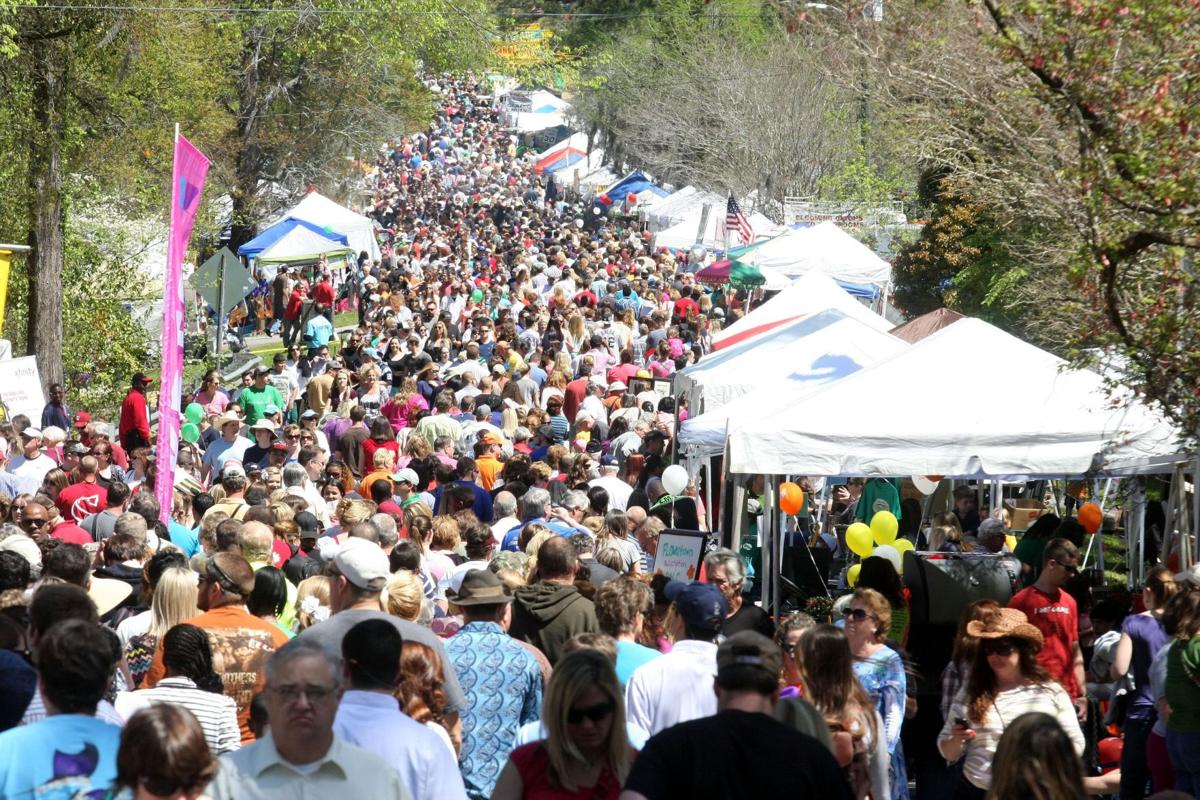
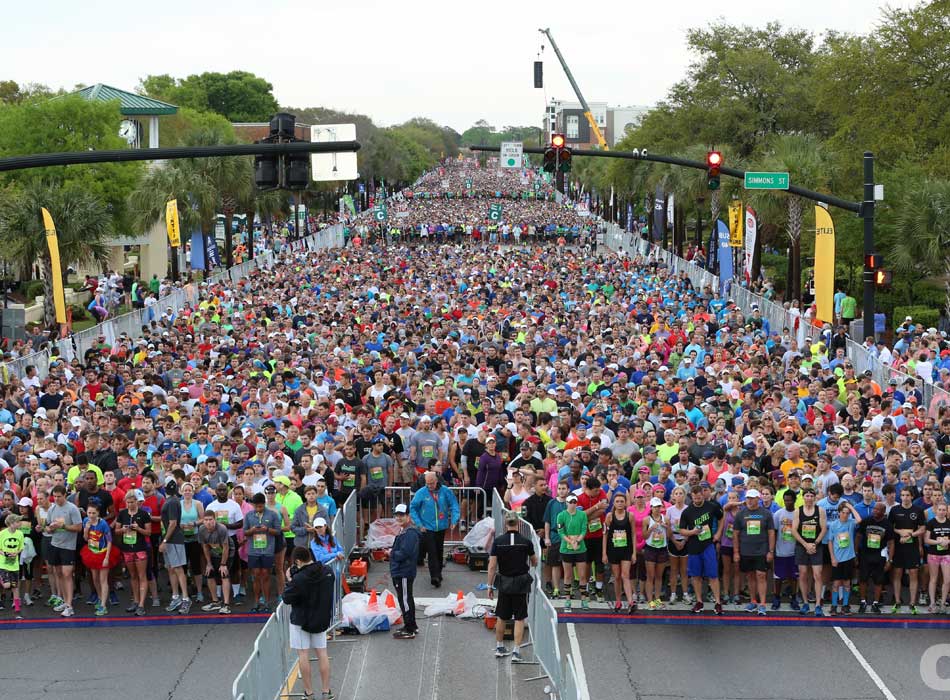
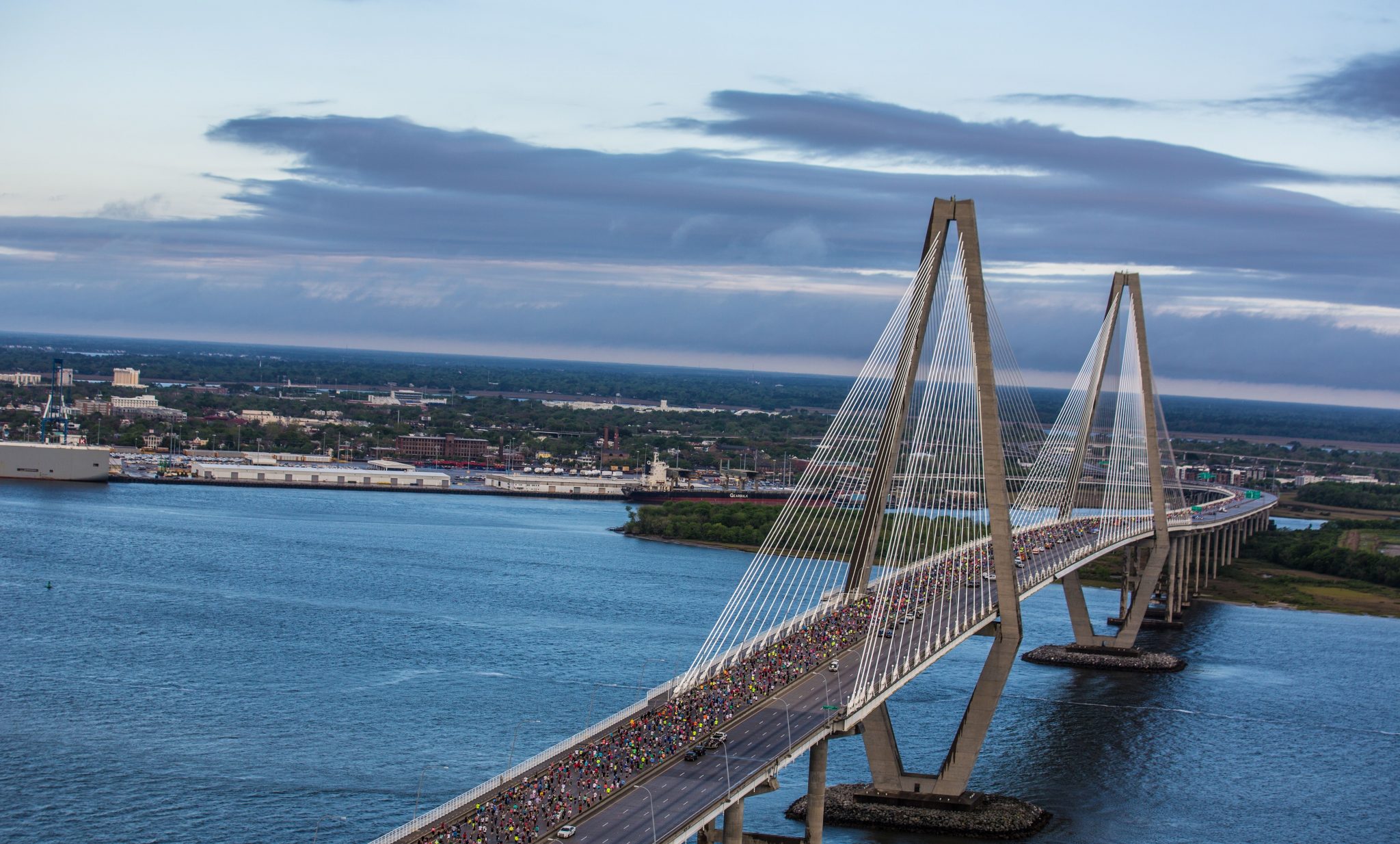
If a designated capital existed for this tri-county region, it should be Summerville, the community where my next project was, since this small city’s residents are spread out and into all of these counties. And if this undesignated region had one day, that was singled out above and beyond the other 364, it would be the last-of-March/first-of-April Saturday each year. On this weekend, the area’s azaleas are in full bloom, the town of Summerville is in the midst of its annual Flowertown Festival, and Mt. Pleasant and Charleston team up to host the Cooper River Bridge Run. Berchador Day is not a real thing, but if it was, it would be this day each spring.

Flowertown Festival

I couldn’t imagine better timing, on this major weekend, with HGTV producers imbedded for my project house with nowhere to go but up. At the Flower Town in the Pines, vendors, crafty people, and tourists from all over the southeast have made this event the state’s top festival each year. And on that Saturday morning is the annual 10K race, one of the largest in the country.

Cooper River Bridge Run
Would producers want me to run amongst the thousands crossing under and through the diamond arches of the Ravenel Bridge? I’d done it before and would enjoy jogging along again, this time for the cameras. I also wondered if they might film me walking the historic streets of Summerville with bright colorful flowers dotting each scene. And the blocked off main streets of the town, amongst the sea of white vendor tents clogged with locals and visitors, would be a tasty nugget to drop into the story of the project.

The Ravenel Bridge during the race

There wouldn’t be much time for these extras, but I imagined a few moments within the electric environments would be worthy of consideration, experiences the film crews would appreciate and enjoy, and worth the added effort needed by the production team. 

Summerville's Azalea Park
Along with all the other good news, his providential timing was another thing to be thankful for. And the glare created by this gratefulness blinded me to things I should have been seeing and doing. 

(Response to TV Show Viewers: Post 35 - Coming Soon)