The question comes up frequently in various forms. Is it cheaper to: a) renovate or b) tear down and build from scratch? The answers vary. Sometimes an experienced builder flatly answers, "Yes. It's always cheaper to demo the old and put up something new." Other times a construction veteran will simply explain that more information is needed to answer the question. Then there are other more complicated responses that identify geography, weather, the economy, and a list of other factors that impact a building project. Bringing down a dilapidated home may be the way to go, but not always.
When the television program Extreme Makeover Home Edition started airing in 2003, I made sure to catch the first few episodes because what I do is sometimes described as 'extreme home renovating.' If I remember accurately, the initial houses were not tear-downs. They were major rehab efforts and total gut-jobs, but Ty Pennington and the gang worked with the original bones of the family house, redid it, and made improvements. I like that concept. Salvaging what's worth keeping, getting rid of things that need replacing, and making a house better than it was. However, somewhere in the shows early history they started taking the house down to the ground, hauling everything away, and starting over. I loved the whole idea of the EMHE team giving a special family a fresh start and all, but to be honest I was most interested in the construction stuff and the before/after transformations. Demoing the old and rebuilding new? That's not the way I do things, and after the first season I tuned out more than I tuned in.
Last week, I priced up a small project in Charleston, South Carolina. Although this prospective renovation was within one of the historic districts, it was only 36 years old. When estimating for a renovation, you have to be ready for unexpected costs that may be hidden. In this project, I had to prepare my friends looking at the property for all the unexpected expenses. This makes the cost number higher now than it might actually be down the road when everything is said and done, but I think this is the best approach. I could have given them an overly optimistic estimate and then explain later why things cost more, but that's an unnecessarily bumpy path to take. This reality is at the heart of cost comparisons regarding rehab and building totally new. In general, a renovation is more challenging, more work, and less predictable. Easier translates to cheaper. That's why new construction gets the green light so frequently.
In my view, newer is not necessarily better. Look at the City of Charleston again as an example. The Holy City has not just accepted it's old buildings, it protects and treasures them. The Board of Architectural Review (BAR) has jurisdiction over all the city's buildings and requires a review of work on any buildings over 75 years old. This is not a control issue. This is a money issue. Tourists flock to our city because of it's history and all the old preserved buildings that help tell the stories of the past. So if you think about it this way, it costs money to save old buildings, but it can pay dividends that make it worth the effort. As a side note, Charleston does allow new construction, but they are involved in the process from the start and the new buildings often look like others that have stood for hundreds of years.
Too frequently, I see great old buildings getting torn down and hauled to a dump site. Then something new goes up that's shiny and modern, but a building that's not necessarily an improvement over what had been sent to the landfill. At times, I learn later that the contractor convinced the decision makers that tearing down was the best way to go. I agree, it was the best way to go for the builder, but I won't say it's always been best for everyone else. The people and the community may save some money in the short run, but over time, when all the area's old buildings start disappearing, a warm community starts to evolve into a something less charming, somewhere people don't want to live, work, and do business.
And finally, I'll end my rant with a really great example of why sometimes, renovating an old home is the way to go. I'm linking up with thisoldhouse.com for the pics because the before/afters do a lot to help share this story. A young woman (Tara C.) and her husband decided to save a home in rough shape that was located on family land. Her grandfather and great-grandfather had built the home and the young couple and her father worked together to renovate it. This is better (not easier) than tearing down and building new for so many reasons, but the one I think of most clearly is that someday, this couple will hopefully have a family of their own and Tara can tell her child (or children) that four generations of men in their family (and Tara herself) worked on that great house.
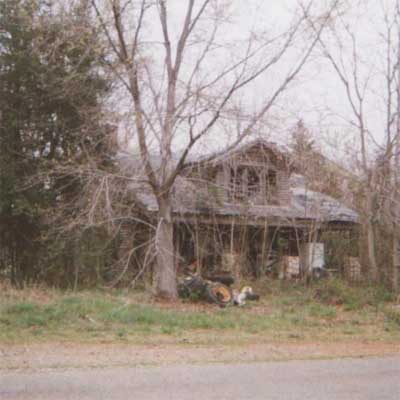 |
| The Tara C. Family Home - Before |
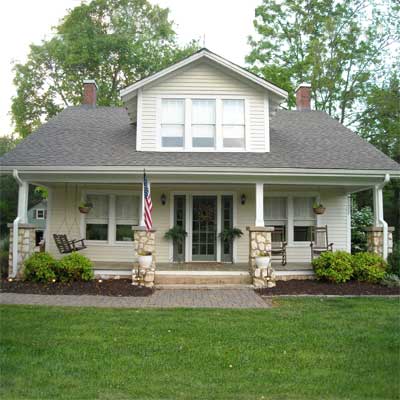 |
| After |
Look at that after pic above. That's the same house! Results like these (and the stories/history that come along for the ride) are why... in the battle of Renovating vs. Demolishing and Building New, I'm cheering for the rehab effort more than it's rival most of the time.


