Showing posts with label quoting. Show all posts

Thursday, January 2, 2014

Quotes Shouldn't Change

I was running around on Tuesday, getting some last minute things crossed off my list before New Year's Eve when I saw a face that looked familiar.  You know how it goes; you see someone and you ask yourself, "How do I know that person?"  I was actually holding the door open for them when I realized how our paths had crossed.

Back in 1999, I was getting written proposals for a project.  I had my multiple prices and awarded the flooring scope to a local subcontractor.  All the estimates were in the same ballpark, all the bidders were equally qualified for the work, so the obvious choice was the lowest number.  An easy call.  I telephoned the low bidder and advised them that they had the job.  The next day, something unusual happened:  the prospective contractor called me to say they'd have to raise their price.  There was not a lot of hesitation or apprehension coming for the other end of the phone, it was just sort of matter-of-fact as if they were sharing some news I needed to be aware of.  Something like, "Just calling to let you know that we took another look at our price and we're going to need more money than we thought."  This is not normal.  No one does this.  I mean, this happens almost never.

Have you ever heard of the bate and switch sales strategy?   With the bait and switch, a business person or company advertises something for one price and then when they get a customer lured in to make a purchase, they adjust things in their own favor to make more money.  I guess it felt a little like that.  So anyway, I thanked the people for the news, but without much thought I let them know I wouldn't need them for the job and that was the end of that. 

Then I called Bidder #2 and gave them the job.  Maybe I spent a couple hundred dollars more, but I never thought too much about it... until Tuesday when I spotted the price changer from '99.  Another thing I'm remembering now is that I ended up going back to subcontractor #2 on at least a half dozen more projects in the years that followed and would  probably be using them even now if they hadn't have relocated their business to another town farther away.

So this is just another lesson in the need to get multiple prices.  Hiring someone for a job on a renovation is the beginning of a relationship.  It may last a few days, or in some cases, it may be ongoing for years.  On the same project I mentioned above, I hired a contactor I'm still using today 14 years later.  He's not just a tradesman on my job, he's a friend.  But like I said, these are relationships, business relationships and you don't want to head down a path with someone who's jerking you around at the start. 

Quotes shouldn't change unless you change something.  If you want more, you need to be ready to pay more.  If you need less than you can ask for a credit.  (But understand that even though this discount is customary it's not guaranteed.)  Also, get something down on paper if you and your contractor adjust the price.  You may not be saying the same thing and getting it in writing will eliminate the possibility of confusion when it's time for you to write a check. 

Finally, as I've said before, work hard to get multiple quotes.  Then, if someone tries to go up on their price, you can point to the signed agreement and/or be ready to go to the next person on your list.

See Push Hard to Get Quotes or A Business Lesson From Duck Dynasty's Phil Robertson      

Saturday, November 23, 2013

A Business Lesson From Duck Dynasty's Phil Robertson

It's hard to go a day without seeing at least one of the bearded faces from Duck Dynasty.  I haven't watched every season, but I've seen enough episodes to have a favorite; it's the one where the guys have a doughnut eating contest, Si wins, has the winning raffle ticket for the camper, and wakes up out in the woods.

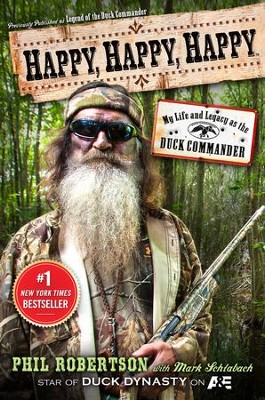
My sister gave me Phil's book Happy, Happy, Happy: My Life and Legacy As the Duck Commander for my birthday this past summer and I wanted to share one specific story from it that may be eye-opening for some DIY home renovators.

Halfway through the autobiography the Duck Dynasty patriarch tells of the early days starting Duck Commander.  He received a $25,000, interest free loan from a businessman at his church.  This was his start up money and at the top of his list was a lathe to create the duck call barrels.  He shopped around and located the equipment he needed in Arkansas.  The man asked him how much he had to spend and Phil told him...twenty five thousand dollars.  At the time it seemed like a blessing because the seller advised him that the lathe he was selling was priced at $24,985.  In hind sight it may have been a tongue in cheek figure, but Phil didn't get the joke and paid the price.  Later he realized that the big tool was really worth only $5,000 and the bearded duck hunter writes that it took the family nearly a decade to recover from this con.

If you've read many of my posts you know what I'd have told him: "Get at least three prices on things when you don't know the value."  Three is good, four is better, and five is ideal.  It would have taken some time and effort for Mr. Phil to find two or three other lathes up for sale, but it would've been time well spent.  This is easy for me to say, but I will also credit this mindfulness to a large company I worked for that helped me learn this before I was out working for myself. 

Comparable scenarios happen all the time in the home renovation world.  The greener you look, the more tempted the wrong contractor will be to try to sucker you in to paying too much.  It's real simple.  They ask you something like, "How much do you have to spend?"  And you naively answer the question.  Then oftentimes they try to do you the way that guy did Phil and if you're not careful you'll be into an agreement for something very close to the number you shared or something much higher than you should pay... which to me is just as bad.  This is not the way it should work though.  You simply tell them what you want and they give you a number.  Then, you repeat the same basic scope description (apples to apples) to comparable tradespeople and wait for them to tell you what it will cost in the form of a written quote or bid.  Be straight up with them about what type of work you want them to quote and expect them to be straight forward with you in return.  Ignore any assurances that "Everyone will do the work for some similar price," or "No one will do it cheaper," and push ahead to get more prices. 

Also, I'm ready to haggle at a flea market, in a pawn shop for used tools, or when I'm buying a car, but with contractors quoting me for work, I don't go that route.  Construction renovating is a team effort and I don't do my teammates that way.  I ask them to just give me their best price from the beginning so they can "still make money."  Then I let them take it from there to get as tight as they can with their figures.  I review the bids and choose the best contractor for the job.  Sometimes it's the low number, but not always.  (For more on this topic see Push Hard to Get Quotes.)

So if you want to be happy, happy, happy, don't tell everyone at the poker table what cards you're holding and don't tell bidding contractors how much money you have to spend.  Be ready when they ask, but keep your budget details to yourself.    

Wednesday, October 31, 2012

Don't Beg For Quotes

Most of those who read this post will be familiar with the song by the Temptations titled Ain't Too Proud to Beg.  Well when it comes to gathering estimates for your project, I'll encourage you to think of this song and then ignore it's message.  But this advice is not about pride it's about common sense.  Don't beg for quotes.

I've written more than once that it's important to work hard to get multiple price estimates whether you're trying to sign someone up to re-roof your house, install wood floors in the living room, or agree to take down a big tree in the yard.  Three prices is good, four is better, and five different quotes is ideal.

This is an example of how you get the value of work:  if you get five apples-to-apples prices for something that'll cost three grand, there's a good possibility you'll get estimates like $2500, $2900, $3000, $3100, and maybe $3500.  Assuming you don't know how much this work should cost, you will after you look at the five different prices since $3,000 is the average.

Now, this gets me to today's point.  I'm telling you to work really hard to get multiple estimates, but don't go too far for a proposal and into the area where it feels like you're begging.  Simply put, you don't want to enter into an agreement with someone that sets you up into that circumstance.  Furthermore, if you have to ask them for their number a second time, take this as a red flag and don't forget it.  If they can handle your business, they'll be able to deliver on the task of working up a written price estimate.  It stands to reason that if you have to do anything that feels like begging them for the quote then you'll likely have to do some similar pleading when it's their turn to work or finish their part as required.     

Also, if a business person says they'll get you a price by "tomorrow morning," then they better have it for you by the next day before noon.  However, it's another warning signal when someone promises to provide your written estimate and are late.

If you find yourself working a little too hard just to get a price, that's okay.  Don't hang up the phone or slam the door.  Just acknowledge what you're doing and get the estimate you've been after.  Thank the person for their time, but use someone that quoted you in a timely, professional way.  These may be tradespeople more accustomed to using their hands and tools than office equipment or computers, but providing written estimates is part of the job too and you should accept nothing less than basic courtesy and professionalism.

See Push Hard to Get Quotes (July 9, 2012)

Friday, June 1, 2012

Separation of Church and Renovate

We all grew up learning that our nations founding fathers believed in the separation of church and state.  Some will argue that they wanted to protect the nations governance from the influence of the churches and others may believe that they wanted to keep faith and spirituality from being tainted by the dirtiness of politics.

In Step 4 - Pull Out the Valuables, I described how I go through the things left behind in the house.  Bibles might be placed into a third category; things I save and then give away.  I never throw away a Bible.  After Hurricane Katrina hit the Gulf Coast, I traveled down to Pass Christian, Mississippi as part of a construction relief team.  Along with a weeks worth of clothes and some of my hand tools, I remembered to pack the stack of Bibles I'd collected from my various projects.  I enjoyed the week of volunteer work and it felt good to pass along the sacred books to those who'd lost theirs in the historic storm.  

With that said, I'd like to advise you to be wary of people who use religion to try to get your business.  This is another lesson I've learned the hard way. 

Some businesses include religious symbolism in their marketing and advertising.  This is a less than subtle effort to send a message to prospective clients that's something like:  Hey, we're religious and spiritual businesspeople.  You can trust me.  Hire our company and we'll demonstrate the values that our houses of worship stand for.  These are high standards and the people who use religion to get business are frequently not able to measure up to the level they're aligning themselves with.  They should leave faith out of their marketing approach, but they don't because they need this tactic to get business and simply put, it works.     

I don't like pointing this out, but I've been on the frustrated end of this relationship too many times to count.  Plainly put, those people usually don't perform very well.  They aren't overly concerned about deadlines, they oftentimes come up short on their part of verbal commitments, and more times than not they do their business in ways that run contradictory to what they're being taught during worship.  It's bad for their business and more significantly harms the faith, church, synagogue, or denomination they claim membership with.  

So be mindful of this and be careful.  Good contractors don't have to use their faith to get work.  If your tradespeople are rock solid spiritually, you'll likely figure it out by their actions without them making an effort to tell you.  In my eyes, reputable business people don't need to use religious symbolism on their advertisements or business cards and they don't need to have it hanging from a chain on their neck on your first meeting.  If a prospective trades-person wants to bring-up religion from the get-go, let them give you a quote, but recognize this red flag, get some more prices, and think hard of going ahead without them.  You'll be glad you did.